Shugendo and the Mountain Path
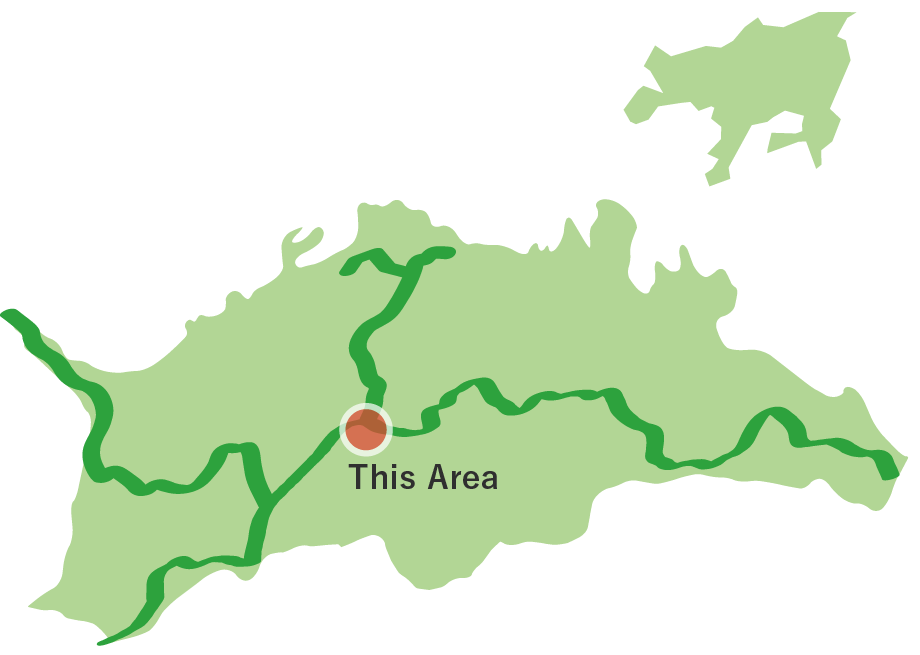
Shugendo and the Mountain Path
The Shugendo and Mountain Path take you through villages linked to Shugendo traditions and over gentle mountain passes, offering breathtaking views and a refreshing sense of openness. You can enjoy a gentle mountain stroll of about four hours while getting a sense of the breath of history along the way.
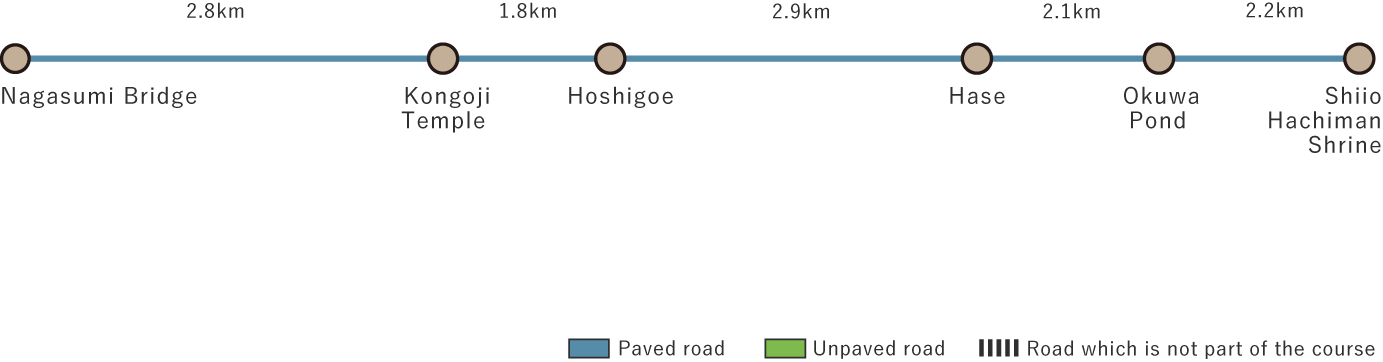
Shugendo and the Mountain Path(11.8km)


※下記表はスクロールしてご覧ください。
 Spots to photograph
If you wish to receive a certificate, please take a photo that includes yourself at the designated photo point for each course.
Nearby sightseeing spots
-
1
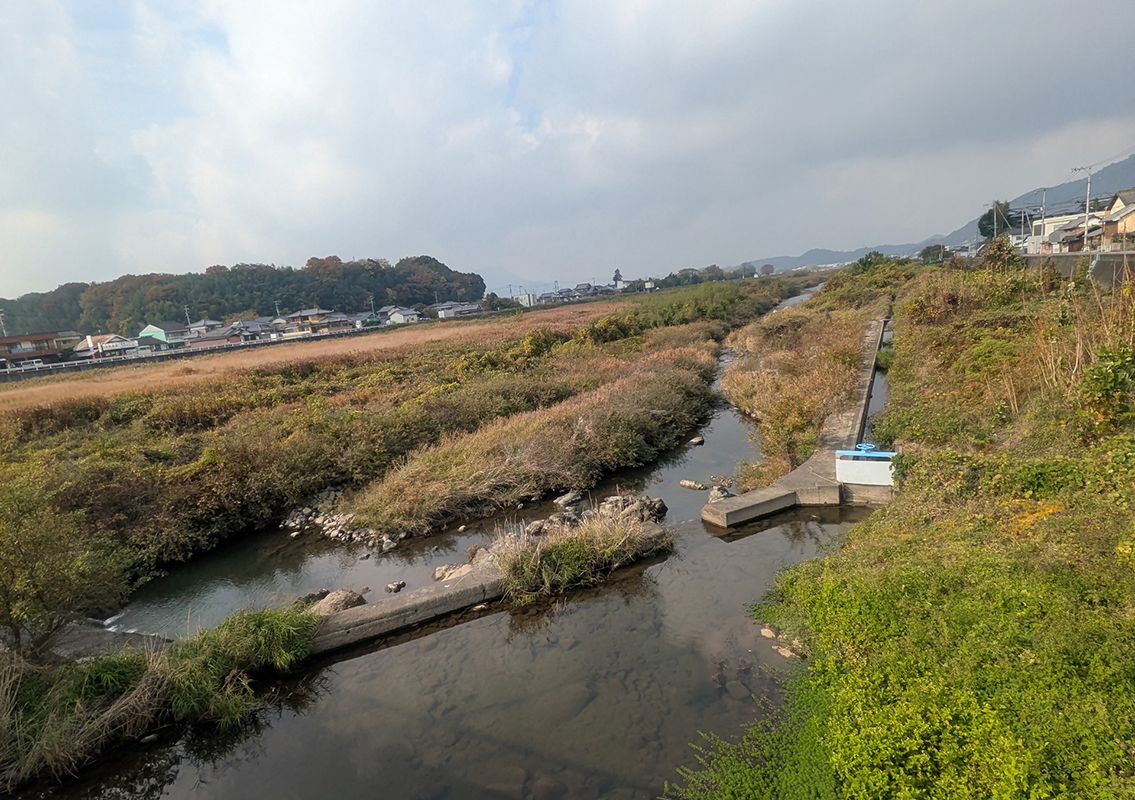 Doki River
The Doki River originates in the Sanuki Mountains and flows through areas including Marugame City before emptying into the Seto Inland Sea. It is the only Class A river in Kagawa Prefecture.
Valuable natural forests remain around Mount Ryuo and Mount Daisen, the sources of the river, creating a diverse environment from upstream to downstream. One of its greatest attractions is the ability to observe a rich ecosystem of plants and animals throughout the entire river basin, including freshwater fish and amphibians. -
2
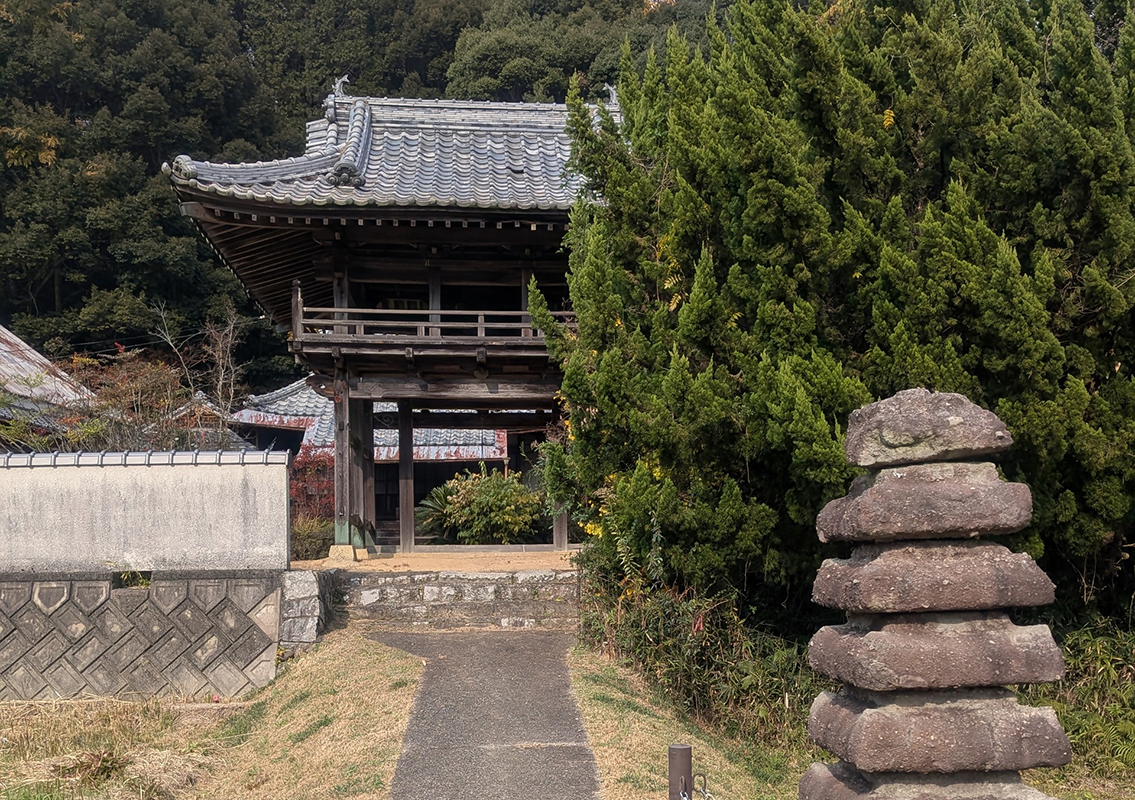 Kongoji Temple
Its honorific mountain prefix is Ishibotokeyama. It flourished from the end of the Heian period to the Kamakura period and was known as Kongoin Kinkasoji Temple. The temple preserves Kamakura-period roof tiles and bronze mirrors excavated from its grounds. In front of the main gate stands a charming stone, thirteen-tiered pagoda, adding a sense of historical atmosphere.
-
3
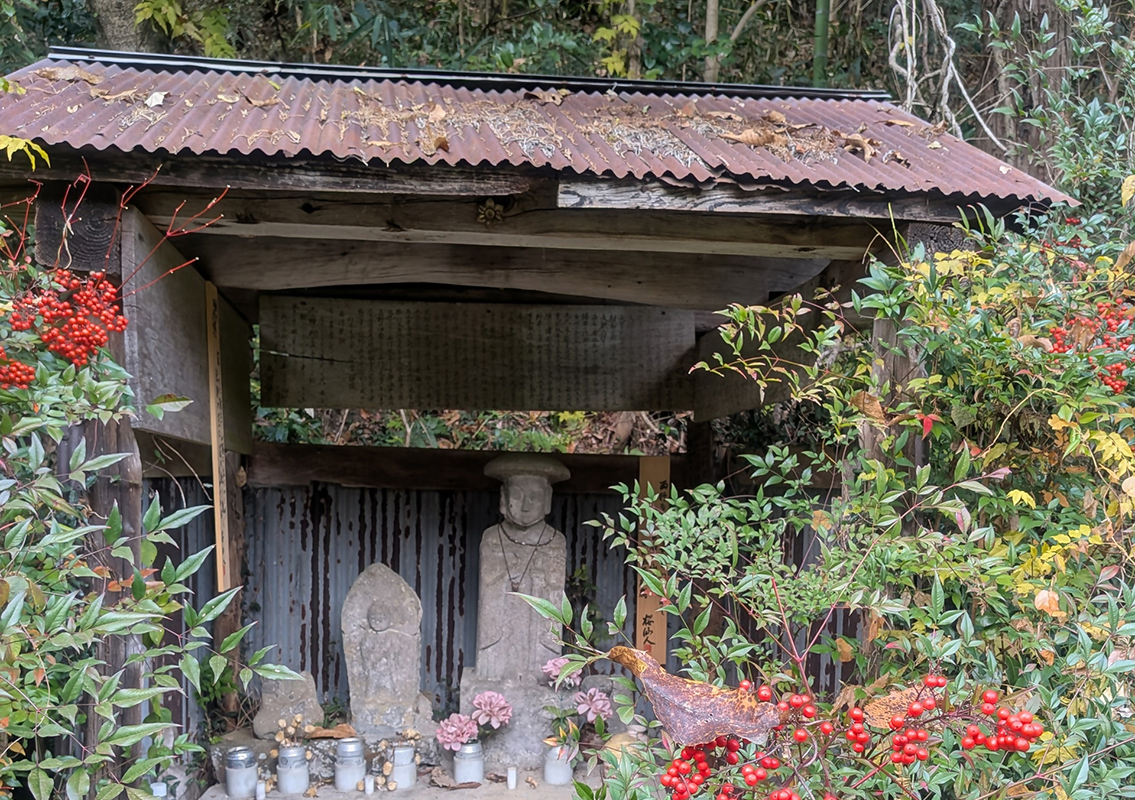 Stone statue of Saigyo Hoshi
Saigyo traveled from Tohoku to Shikoku between the late Heian and early Kamakura periods, leaving behind poetry collections such as the Sankashu. As a trace of his journey, a small hut stands beside the route, where a stone statue of Saigyo Hoshi is enshrined. His richly lyrical poems had a profound influence on later generations.
-
4
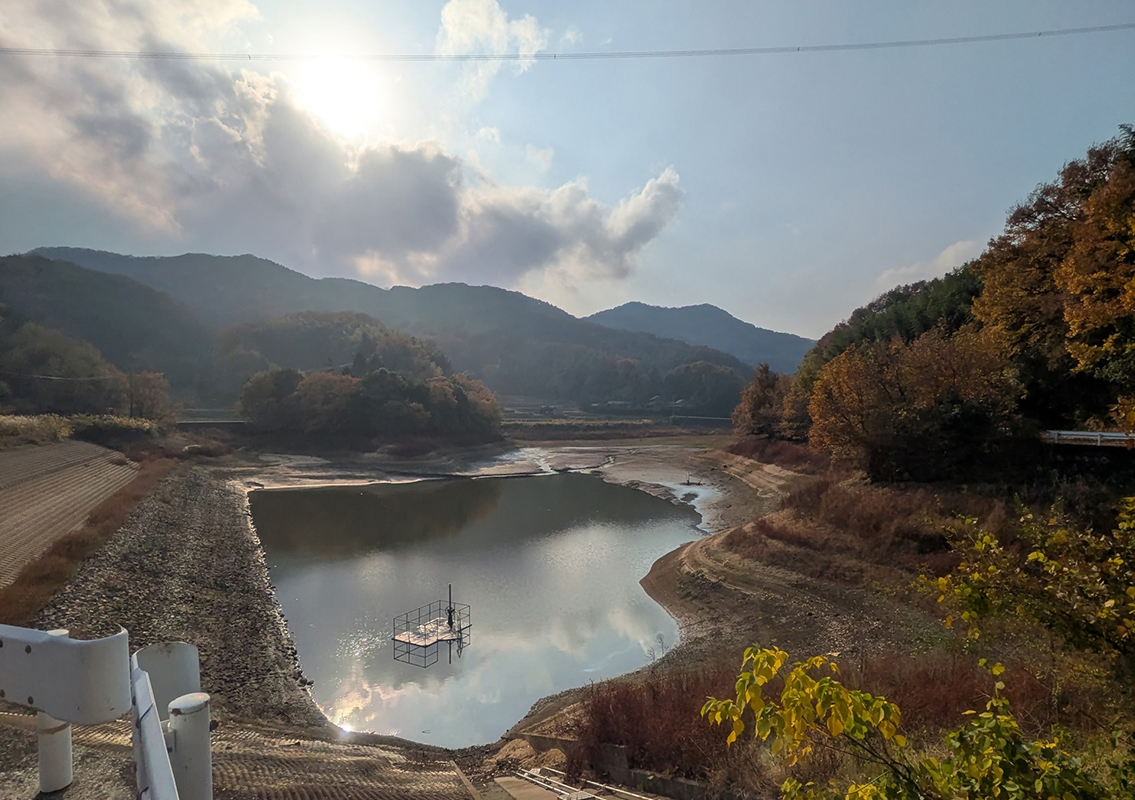 Okuwa Pond
Okuwa Pond, located in Nishibun, Ayagawa Town, is a large reservoir with a capacity of 162,000 cubic meters.
This area, known as Sakaiba, is said to have long been bustling with people making pilgrimages to Mount Tsurugi and Mount Oyama. -
5
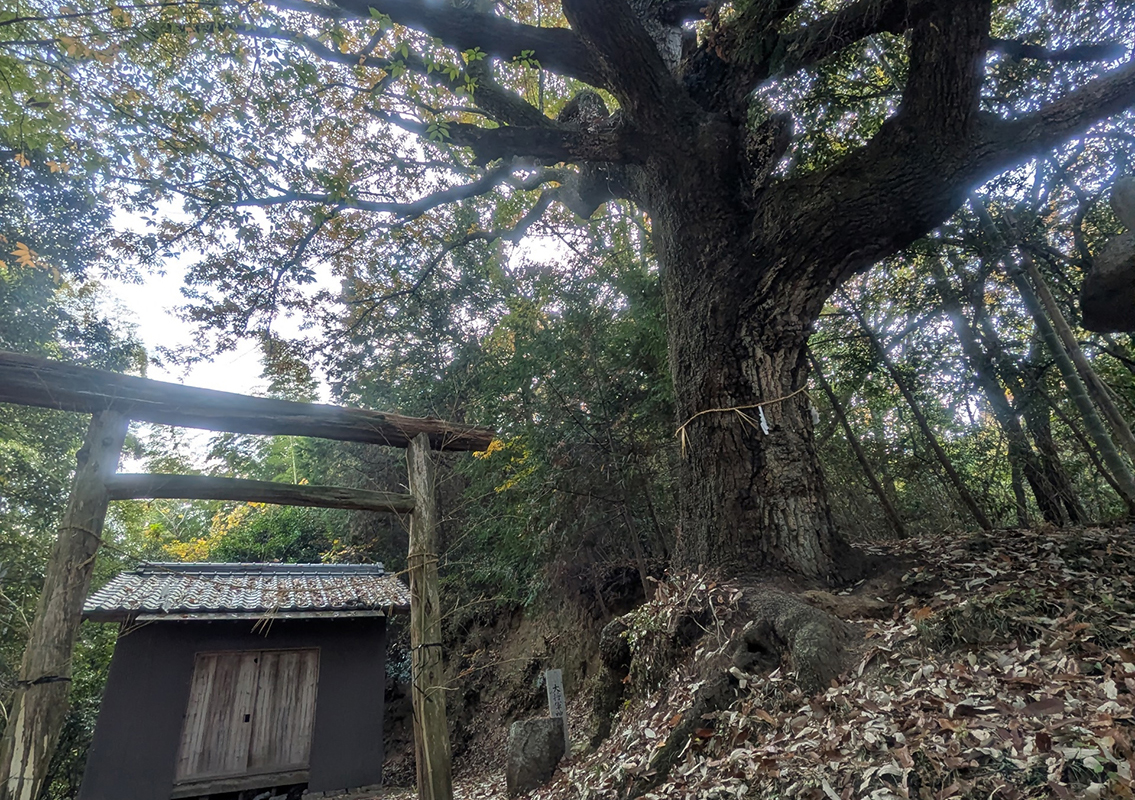 Kagawa Preserved Tree: Chinese Cork Oak at Daishogun Shrine
You can reach Daishogun Shrine by climbing the steep stairs along the sharply curved road that runs alongside the community hall.
The Chinese cork oak tree standing to the right of the torii gate within the compact shrine grounds is a giant tree reaching a height of 20 meters with a breast-height trunk circumference of 3.4 meters. In addition, lichens cling to the bark with its well-developed cork layer, while the three-way branching trunk spreads its branches majestically over an area 25 meters east-west and 21 meters north-south. -
6
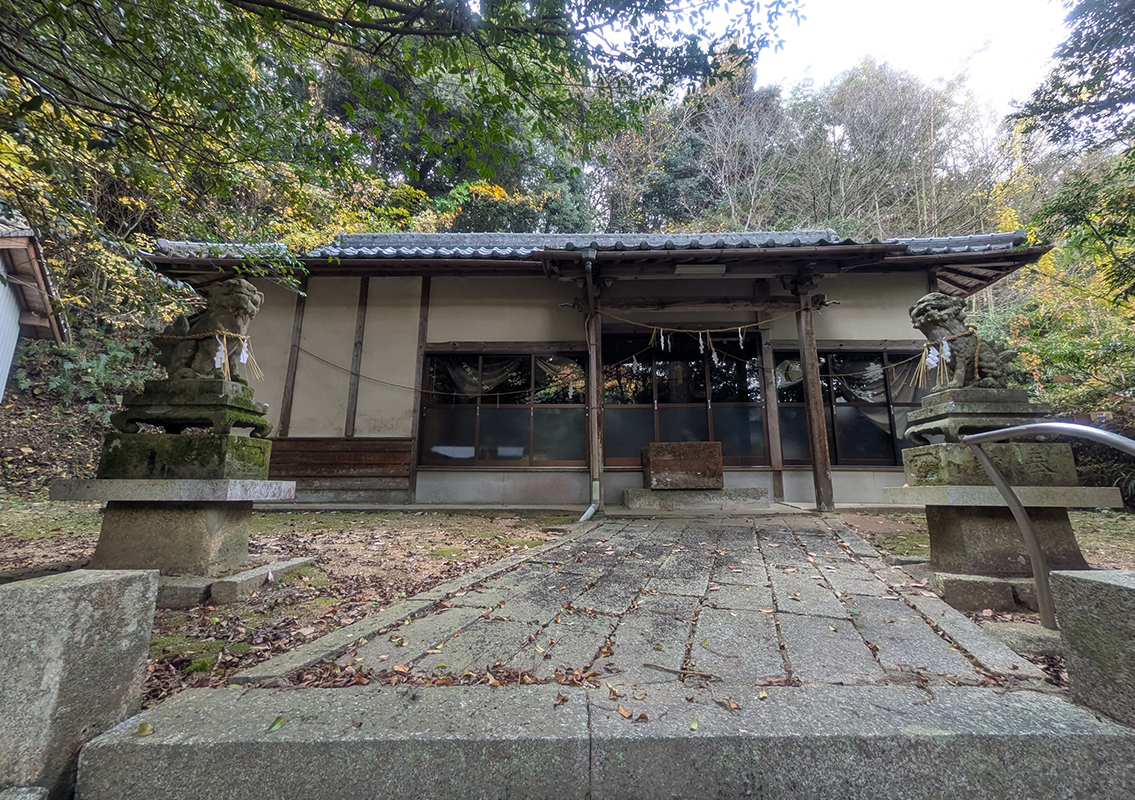 Shiio Hachiman Shrine
Shiio Hachiman Shrine in Ayagawa Town is known for its mystical shrine forest. As its name suggests, there are many chinquapin trees, and because it is considered one of the largest Japanese chinquapin (Tsuburajii) pure forests in the prefecture, it has been designated as a Natural Monument. It is also a hidden local landmark that draws faith from the local community and serves as the starting point of the Shikoku route.